Maha Mrityunjaya Jaap: The Complete Guide to the Great Death-Defeating Mantra, Benefits, and Rituals
An exhaustive resource covering the origin, philosophical basis, and practical steps required for performing the potent Maha Mrityunjaya Jaap, ensuring health, peace, and spiritual liberation.
Mangal Dosh Poojan Team
1. The Mantra: Origin and Profound Meaning
1.1. Sanskrit Lyrics and Phonetic Guide
The Maha Mrityunjaya Mantra, also known as the Tryambakam Mantra or Rudra Mantra, is a powerful verse from the Rig Veda. Precise pronunciation is critical for harnessing its vibrational energy. The lyrics are:
Mantra in Sanskrit and English Transliteration
1.2. Deeper Meaning (Word-by-Word)
The mantra is a prayer to Lord Shiva, the three-eyed one, for protection and spiritual liberation. Its meaning is a plea to be freed from the bondage of suffering and death, just as a ripe cucumber is separated from its vine, and to be blessed with the nectar of immortality (Amrita).
1.3. The Story of Rishi Markandeya and Chandra Dev
According to tradition, the mantra was given by Lord Shiva to Rishi Markandeya to save his life from Yama, the God of Death. It was also used to save the life of Chandra Dev (Moon God) when he was cursed by King Daksha, highlighting its power to avert untimely death and heal major afflictions.
2. Immense Benefits of Maha Mrityunjaya Jaap
2.1. Health and Longevity (Ayushya)
The Jaap is the ultimate spiritual defense against disease and illness. It creates a powerful vibrational shield that helps in the healing process, enhances physical vitality, and grants the devotee a long, healthy life free from untimely death (Akaal Mrityu).
2.2. Protection and Spiritual Liberation (Moksha)
It acts as a shield against negative energies, accidents, and misfortunes. By focusing the mind on the source of consciousness (Lord Shiva), the mantra helps the devotee overcome the fear of death and gradually attain liberation from the cycle of rebirth.
2.3. Mitigation of Astrological Doshas
Regular chanting is a powerful remedy for various astrological afflictions (Doshas) in the birth chart, including Kaal Sarp Dosh, Pitra Dosh, and major malefic transits of planets like Saturn, Rahu, and Ketu. It harmonizes malefic planetary influences.
2.4. Mental Peace and Emotional Stability
The rhythmic chanting of this powerful mantra soothes the mind, alleviates stress, anxiety, and fear, and promotes a deep sense of inner calm, clarity, and centeredness.
3. Step-by-Step Pooja and Jaap Vidhi (Procedure)
3.1. Preparation and Purification
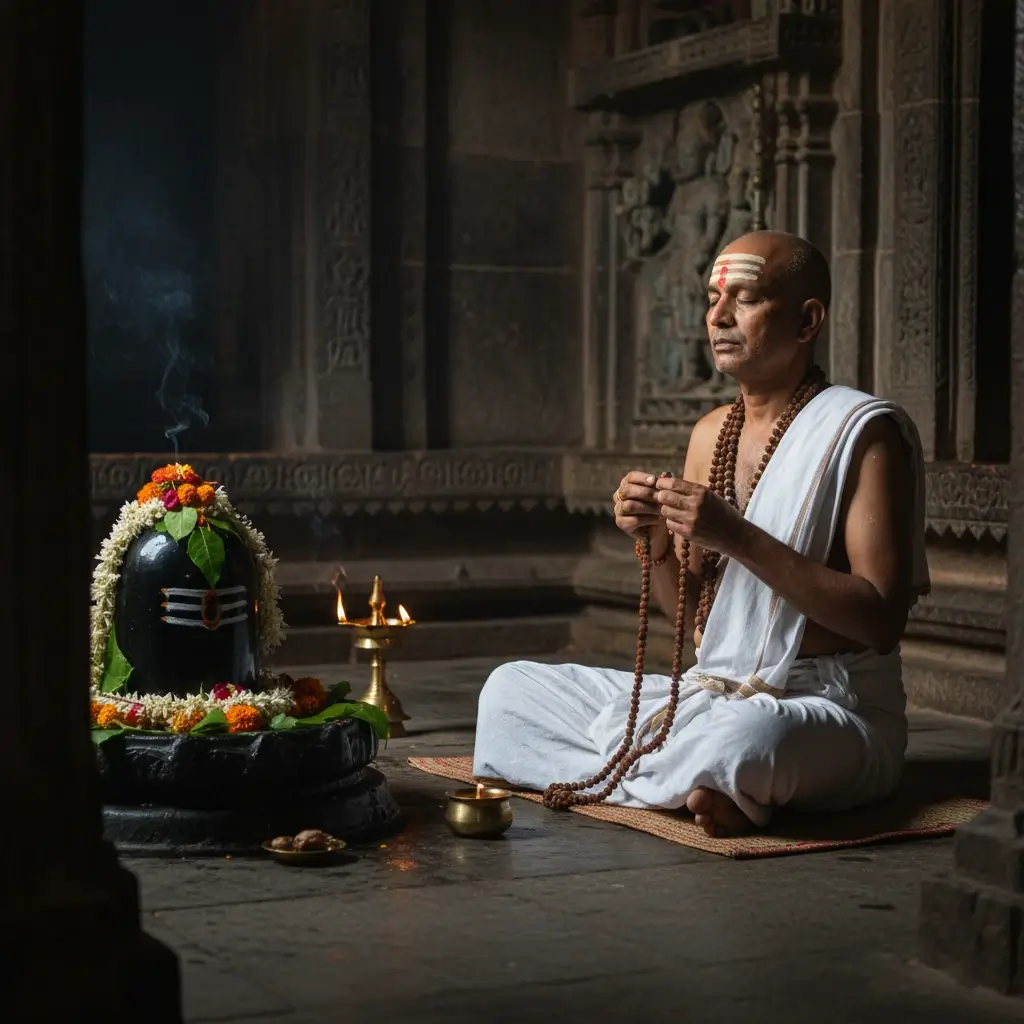
Bathe and wear clean clothes. Choose a clean, quiet spot. Place an idol or image of Lord Shiva/Shiva Lingam on a clean altar. Light a Ghee lamp (Deepak) and incense (Dhoop). Sit on a clean mat (Kusha or wool) facing East or North.
3.2. Sankalp and Primary Worship
Take a vow (Sankalp) stating your name, lineage (Gotra), place, date, and the specific reason (Intention) and count of the Jaap you intend to perform. Perform Ganesh Pooja first to remove obstacles, followed by basic worship (Pooja) of Lord Shiva with water, Bilva leaves, flowers, and sandalwood paste.
3.3. The Jaap (Mantra Chanting)
Begin chanting the Maha Mrityunjaya Mantra using a Rudraksha Mala to count the repetitions. The most common daily count is 108 times. For major rituals, professional priests perform $1.25$ lakh (125,000) chants, known as a 'Purashcharan', often spread over several days.
3.4. Havan, Tarpan, and Conclusion (Purashcharan Angas)
For a complete, large-scale ritual (Purashcharan), the Jaap is followed by: Havan (fire ritual, $1/10^{th}$ of the Jaap count), Tarpan (offering water, $1/10^{th}$ of Havan), Marjan (sprinkling water, $1/10^{th}$ of Tarpan), and finally, Brahmin Bhojan (feeding Brahmins, $1/10^{th}$ of Marjan).
3.5. Final Aarti and Prasad
Conclude the ceremony with the final Aarti (waving of lamps) dedicated to Lord Shiva. Offer and distribute Prasad (blessed food offerings) to all family members and attendees.
4. Rules and Precautions for the Chanting
4.1. The Importance of Correct Pronunciation
Since the mantra is from the Vedas, the correct phonetic pronunciation (including Swaras or intonation) is essential. Incorrect chanting can sometimes lead to undesirable effects due to the change in the mantra's energy. Listen carefully to a qualified Vedic scholar's recital.
4.2. Best Time and Location
The most effective time for chanting is during Brahma Muhurta (approx. 4:00-6:00 AM) or sunset. Chanting in a temple, particularly a Jyotirlinga Sthan (like Trimbakeshwar or Ujjain), is considered highly meritorious. If chanting for a sick person, it can be done at their bedside.
4.3. Restrictions and Conduct
During the period of the Jaap, especially for a large Sankalp (like $1.25$ lakh), the devotee must maintain a Sattvic diet, abstain from non-vegetarian food, alcohol, and negative speech. The devotee should avoid breaking the Jaap midway once started.
Key Takeaways for Powerful Jaap
Mantra Origin
The mantra is from the Rig Veda (RV 7.59.12) and was revealed to Rishi Markandeya.
Primary Benefit
Grants 'victory over death' (Mrityun-jaya), meaning protection from untimely death, accidents, and prolonged illness.
Required Count
Daily Jaap is 108 times. For specific purposes (Sankalp), $1.25$ lakh ($125,000$) repetitions is the traditional 'Purashcharan' number.
Auspicous Time
Brahma Muhurta (4:00-6:00 AM) and auspicious days like Mondays, Maha Shivaratri, or Shravan month are highly recommended.
Do not Substitute
The mantra provides spiritual and mental healing but is not a substitute for professional medical treatment.
Quick Reference Jaap Essentials
Spiritual Focus
- Wear clean, traditional clothes (preferably white)
- Use a new Rudraksha Mala
- Perform with a clear Sankalp (Intention)
- Maintain absolute silence and concentration
- Avoid ego, anger, and negative thoughts
Ritual Setup (Pooja/Havan)
- Shiva Lingam or Lord Shiva idol/photo
- Clean mat (Kusha or wool)
- Deepak (Ghee or oil lamp)
- Incense (Dhoop/Agarbatti)
- Bilva Patra (Bel leaves) and white flowers
- Milk, Ghee, Honey for Abhishekam (if applicable)
Post-Jaap Conduct
- Share Prasad (offerings)
- Donate to Brahmins or the needy
- Maintain a Sattvic (pure vegetarian) diet
- Avoid alcohol and non-veg food
- Continue daily chanting practice
"Oṃ Tryambakaṃ, the three-eyed Lord, who is fragrant and nourishes all beings. Like a ripe cucumber separates easily from the bondage of the vine, may we be liberated from death, but not from immortality."
Related Blogs
Maha Mrityunjaya Jaap: The Complete Guide to the Great Death-Defeating Mantra, Benefits, and Rituals
Mahamrityunjaya Jaap is a sacred Vedic chant dedicated to Lord Shiva, believed to bring healing, protection, and liberation from fears. It is performed to overcome health issues, obstacles, and negative influences.
Kaal Sarp Dosh Pooja: Complete Guide to Symptoms, Effects, Remedies, and Rituals
Kaal Sarp Dosh in Vedic astrology is believed to bring obstacles and challenges when planets are positioned between Rahu and Ketu. Learn about its effects and remedies for balance and peace.
Mangal Dosh: The Complete Guide to Symptoms, Effects on Marriage, Remedies, and Pooja Procedure
Mangal Dosh or Kuja Dosha is caused by Mars placement in specific houses of a horoscope. It affects marriage, relationships, and career. Learn about its effects and remedies.